Wrong Answer, Right Life: Eight Americans Who Got Misdiagnosed Into Greatness
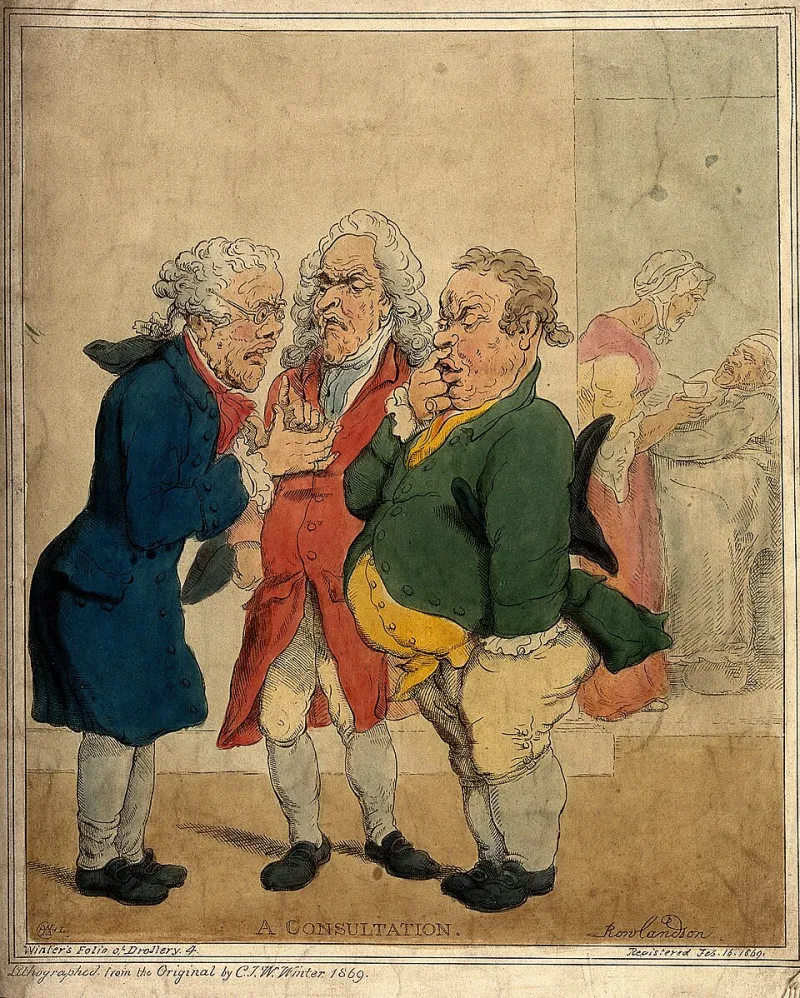
Photo: Unknown, CC BY 4.0, via Wikimedia Commons
We put a lot of faith in the word "diagnosis." It sounds final. Authoritative. Like a verdict handed down from somewhere above the mess of ordinary life. But medicine is practiced by human beings, and human beings get things wrong — sometimes spectacularly, sometimes in ways that ripple outward for decades.
What follows are eight stories of Americans who were told the wrong thing at a pivotal moment, and who — through stubbornness, circumstance, or sheer accident — ended up somewhere extraordinary because of it.
1. The "Slow" Student Who Rewired Neuroscience
At nine years old, a boy in rural Ohio was told by a school psychologist that he showed signs of "feeblemindedness" — a catch-all diagnosis that, in the 1930s, was applied liberally to children who didn't perform well on standardized tests. His parents were advised to lower their expectations.
Instead, his mother pulled him from the school and began teaching him at home, using methods she invented herself — heavy on pattern recognition, spatial reasoning, and hands-on problem solving. The boy thrived. He went on to earn a doctorate in experimental psychology, and his later research into cognitive development fundamentally challenged the very testing models that had once labeled him deficient.
He spent a career dismantling the system that had written him off. The irony wasn't lost on him. "I owe that psychologist a thank-you," he reportedly said late in life. "She accidentally gave me the best education I ever got."
2. The Heart Patient Who Became a Marathon Legend
In 1971, a 34-year-old Chicago postal worker was told after a routine checkup that he had a "structurally compromised" heart and should avoid strenuous activity indefinitely. He was advised to take up something gentle. Walking, maybe. Light gardening.
He started running instead — slowly, reluctantly, almost as an act of defiance. A second opinion three years later revealed the original EKG had been misread. His heart was fine. By then, it didn't matter much, because he'd already completed two marathons and was training for a third.
He ran competitively until he was 61. He credited the misdiagnosis with saving his life — not medically, but spiritually. "I was sleepwalking," he said in a 1988 interview. "That wrong piece of paper woke me up."
3. The "Dyslexic" Architect Who Redesigned How We See Space
A California girl was flagged in third grade as severely dyslexic and tracked into remedial reading classes for most of her elementary school years. The diagnosis wasn't entirely wrong — she did struggle with text — but it missed something crucial: she processed the world almost entirely in three dimensions. She could rotate complex shapes in her mind with a fluency that left her teachers baffled.
Funneled away from traditional academics, she ended up in vocational arts programs, where an instructor recognized what she could do. She went on to study architecture through an unconventional path — community college, then a state university that admitted her on the strength of her portfolio — and eventually became known for designing public spaces that feel, as one critic put it, "like they were built from the inside out."
The dyslexia diagnosis, she has said, was both a burden and a compass. It pointed her away from language and toward space. That turned out to be exactly right.
4. The "Manic" Poet Who Found Her Frequency
In her early twenties, a New Orleans woman was diagnosed with bipolar disorder after a period of intense creativity followed by weeks of exhaustion. The diagnosis led to medication that flattened her output entirely. Frustrated and foggy, she stopped writing.
Years later, a new psychiatrist reviewed her case and concluded the original diagnosis had been incorrect — what she'd experienced was more consistent with cyclothymia, a milder condition that responded differently to treatment. A recalibrated approach restored her energy without dimming her mind.
But the years away from writing had changed her. She'd spent them reading obsessively — history, philosophy, linguistics — and when she returned to the page, her work was unrecognizable from what she'd produced before. Richer, stranger, more layered. Her first collection after the break won a national prize. Several critics noted it read like the work of someone who had lived two entirely different lives.
She had.
5. The "Terminally Ill" Teacher Who Built a School
In 1963, a 28-year-old schoolteacher in rural Georgia was diagnosed with a rare autoimmune condition and given, at most, five years. She quit her job, settled her affairs, and decided to spend whatever time she had doing something that felt meaningful.
She started a small informal school for Black children in her county who had been excluded from white-only public institutions. She taught out of a church basement, then a converted barn, then a proper building she fundraised for herself.
The autoimmune diagnosis turned out to be wrong. She lived to 91. The school she founded — which became accredited, then grew, then merged into the county system — educated thousands of children over six decades. She taught there until she was 79.
"Dying was the most productive thing that ever happened to me," she once told a reporter, laughing. "I recommend it."
6. The "Anxious" Inventor Who Couldn't Stop Tinkering
A Missouri teenager in the 1950s was diagnosed with severe anxiety disorder and told his restlessness and inability to focus were symptoms of psychological disturbance. He was prescribed rest and limited stimulation.
What nobody recognized was that his "restlessness" was engineering thinking. He couldn't stop taking things apart because he was trying to understand how they worked. The anxiety diagnosis sent him to a therapist who, somewhat accidentally, encouraged him to channel his compulsions into structured building projects as a calming exercise.
It worked — not as therapy, but as a career path. He went on to hold over forty patents in mechanical engineering, several of which relate to safety systems still used in American manufacturing today.
7. The "Failing" Athlete Who Rewrote Sports Medicine
A college swimmer in the late 1970s was told by a sports physician that her persistent joint pain indicated early-onset arthritis and that competitive swimming was likely behind her. She shifted her focus to understanding why her body was behaving the way it was — studying kinesiology, then physical therapy, then sports medicine.
The arthritis diagnosis was eventually revised. She'd actually been dealing with a biomechanical alignment issue that was entirely correctable. But by the time that was sorted out, she was deep into a research career that would produce some of the most cited work on overuse injuries in female athletes — a field that had been largely ignored before she got there.
She never swam competitively again. She didn't need to.
8. The "Emotionally Disturbed" Boy Who Became a Conflict Mediator
At twelve, a boy in inner-city Philadelphia was labeled "emotionally disturbed" by a school counselor after a series of fights. The label followed him through adolescence, affecting how teachers treated him and which programs he was allowed into.
A community center director eventually looked past the file and saw something different: a kid who was extraordinarily attuned to other people's emotional states — not disturbed by them, but hyperaware of them. He enrolled the boy in a peer mediation program almost on a whim.
The boy took to it like nothing else. He went on to train as a conflict resolution specialist, eventually working at the federal level on labor disputes. His diagnostic label had called him dangerous. His actual gift was making peace.
The Strange Grace of Getting It Wrong
None of these stories are arguments against medicine or diagnosis. They're something more complicated than that. They're reminders that the path we're pushed onto — even by mistake, even by someone who got it completely wrong — sometimes leads somewhere the right path never would have.
Being misread isn't a gift. But surviving it, and finding your way through it, sometimes is.