The Lab Error That Accidentally Built a Wellness Empire

There's a particular kind of terror that settles in when a doctor slides a piece of paper across a desk and tells you your body is failing. It doesn't matter how calm the office is, how soft the lighting, how carefully chosen the words. Something fundamental shifts. The world rearranges itself around a single new fact.
For Gary Hirshberg, that moment arrived in the early 1980s — and it was built entirely on a lie. Not a deliberate one. Just a catastrophic, life-altering lab mistake that told him his health was in freefall when it wasn't. But here's the thing about catastrophic mistakes: sometimes they send you running in exactly the right direction.
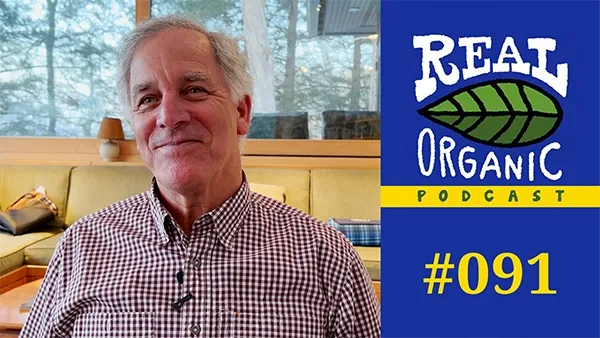 Photo: Gary Hirshberg, via realorganicproject.org
A Verdict Nobody Should Have to Hear
Hirshberg was still a young man when the misread results landed on him. The diagnosis pointed toward serious metabolic dysfunction — the kind of news that makes you question everything you've been eating, drinking, and doing. It wasn't a death sentence, but it felt like one. It felt like a clock starting.
He did what most people with that kind of fear burning in their chest do: he started searching. He dove into nutrition research, sought out alternative practitioners, read everything he could get his hands on. He changed what he ate. He changed how he moved. He became, essentially, a self-taught student of wellness long before that word was plastered across every grocery store in America.
The irony — the beautiful, infuriating irony — is that the condition he was fighting didn't exist inside his body. His labs had been misread. He was fine. But by the time he found that out, he had already become someone different.
The Accidental Apprenticeship
That period of frantic self-education didn't disappear when the corrected results arrived. You can't unlearn what fear taught you. Hirshberg had spent months immersed in the science of what we put into our bodies, and he'd developed something more valuable than a treatment plan — he'd developed a perspective.
He'd also landed at a small organic farming operation in New Hampshire called Stonyfield Farm, a place that was less a business than a mission. The farm was run by Samuel Kaymen, a passionate advocate for organic food at a time when most Americans still thought the word "organic" was something hippies said. The operation was scrappy, underfunded, and perpetually on the edge of collapse.
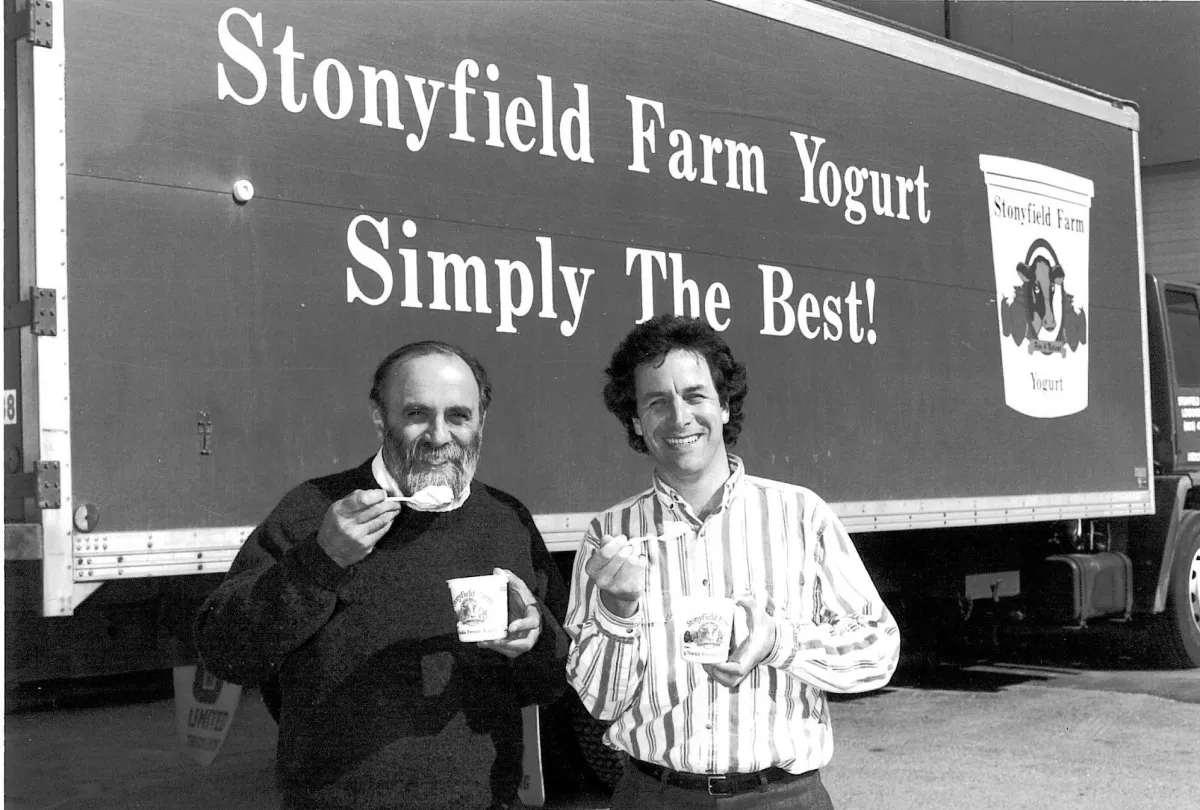 Photo: Samuel Kaymen, via naturalprophets.com
Hirshberg joined not as a savvy entrepreneur spotting a market opportunity, but as a true believer. He'd seen, up close, what it meant to be afraid for your body. He understood, viscerally, why what we eat matters. That wasn't a marketing position. It was lived experience.
Yogurt and the Long Bet on America's Appetite
The product they made was yogurt. Simple, cultured, organic yogurt. In 1983, this was not a billion-dollar idea. This was a niche product for a niche audience, made in a barn, by a team that couldn't always make payroll.
The early years were genuinely brutal. Hirshberg has spoken openly about the financial chaos of those first seasons — the loans, the near-closures, the moments when the whole thing nearly folded. This wasn't a startup with venture capital and a runway. It was two guys and a dream that kept arriving just barely alive.
But something was shifting in America. Slowly at first, then all at once, the country began to care about what it was eating. The organic movement, which had seemed marginal for so long, began creeping toward the mainstream. Stonyfield Farm was already there, waiting.
What Fear Left Behind
By the time Stonyfield grew into a nationally recognized brand — eventually selling a majority stake to Groupe Danone in a deal that valued the company at hundreds of millions of dollars — Hirshberg had become one of the most prominent voices in American food activism. He testified before Congress. He co-founded advocacy organizations. He wrote books. He became, in the truest sense, a public figure in the wellness space.
None of that starts without the wrong diagnosis.
This is the part of the story that's easy to gloss over in the triumphant retelling, but it's the part that matters most. The misread lab results didn't just give Hirshberg a scare. They gave him a curriculum. They sent him deep into a subject he might never have explored. They made him take seriously something most of his contemporaries were still dismissing.
The mistake was the education.
The Strange Arithmetic of Bad News
There's a version of Gary Hirshberg's life where the lab results come back correctly the first time. Where he gets a clean bill of health and goes on to do something else entirely — something perfectly fine, something that never touches the lives of millions of Americans who now reach for a green container in the dairy aisle without thinking twice.
That version of the story exists. It just doesn't happen to be the one that's true.
What's true is that a piece of paper with wrong numbers on it sent a young man on a journey he never planned to take. And somewhere along that journey, he found the thing he was actually supposed to be doing.
Resilience gets talked about a lot in American culture — in commencement speeches, on motivational posters, in business books with titles that promise to tell you the secret. But real resilience rarely looks like strength. It usually looks like confusion. Like scrambling. Like trying to survive something you don't fully understand and accidentally building something beautiful in the process.
Gary Hirshberg didn't set out to change how America eats. He set out to fight a disease he didn't have. The empire was a side effect.
And that might be the most American story of all.