Scrap Paper Skylines: The Steel Worker's Secret Drawings That Built a City
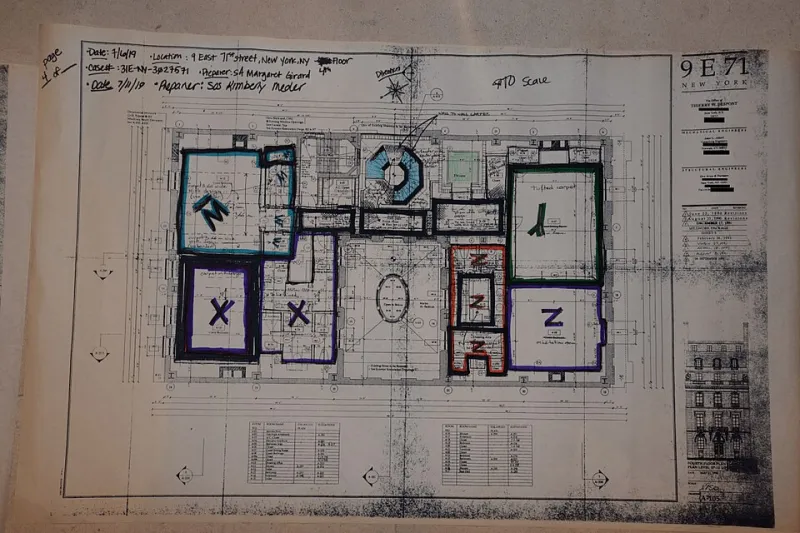
Photo: Federal Bureau of Investigation, Public domain, via Wikimedia Commons
Scrap Paper Skylines: The Steel Worker's Secret Drawings That Built a City
Raymond Czeski never owned a drafting table. He never took a design course. He never submitted a proposal, entered a competition, or introduced himself to anyone as an architect. He was a foreman at a Pittsburgh steel mill, and for three decades, he spent his lunch breaks doing something nobody around him fully understood.
 Photo: Raymond Czeski, via www.allstatetags.com
He drew buildings.
Not doodles. Not rough sketches. Precise, detailed, structurally considered drawings of buildings that didn't exist — buildings with cantilevered facades and interlocking interior courts and load-bearing geometries that shouldn't have made sense on the back of a steel order form but somehow, stubbornly, did.
When Czeski died in 1971, his drawings went into a cardboard box. The box went into a storage room. And for almost three years, that's where American architecture's strangest contribution lived — in the dark, next to a broken space heater and a stack of outdated safety manuals.
The Man Behind the Mill
Czeski came to Pittsburgh in the late 1930s, part of the wave of Eastern European immigrants who filled the steel industry's labor ranks during and after the Depression. He was from a small Polish city, had some secondary schooling, and arrived in America with a working knowledge of German, a few dollars, and — though nobody knew it yet — an eye for structure that bordered on the preternatural.
He worked his way up from the floor to foreman over about fifteen years, respected for his precision and his ability to spot a flaw in a process before it became a problem. Colleagues described him as quiet, methodical, and almost unnervingly observant — the kind of man who noticed things other people walked past.
The drawings started, by most accounts, sometime in the early 1940s. A coworker remembered seeing Czeski bent over a piece of scrap paper during a lunch break, pencil moving with unusual deliberateness. When asked what he was doing, Czeski apparently shrugged and said something like, "Thinking out loud."
He kept thinking out loud for the next thirty years.
A Language Nobody Taught Him
What makes Czeski's drawings remarkable — and what stunned the architect who eventually found them — wasn't just their ambition. It was their technical coherence.
Czeski had no formal training in architectural drafting. But he had spent decades working with structural steel, watching it bent and cut and assembled into shapes that bore enormous weight. He understood load and stress and the relationship between material and form in a way that was entirely practical, entirely physical — and entirely transferable to the page, if you had the mind to make the leap.
He made the leap.
His drawings show buildings that engage with their sites rather than sitting on top of them — structures that step down hillsides, that wrap around existing trees, that use the slope of Pittsburgh's famously uneven terrain as a design element rather than an obstacle. He drew towers with internal voids that let light travel deep into their cores. He designed civic buildings with ground floors that opened entirely to the street, decades before that became a mainstream principle in urban design.
None of it looked like the architecture being built around him. Some of it looked like the architecture that would be built thirty years later.
The Box in the Storage Room
After Czeski died — quietly, of a stroke, at 67 — his coworkers cleared out the small office he'd used at the mill. Most of what they found was unremarkable: work orders, maintenance logs, a few personal photographs. The drawings were bundled together with rubber bands and labeled, in Czeski's careful handwriting, simply "buildings."
Nobody knew what to do with them. They weren't documents, exactly. They weren't personal effects in any obvious sense. Someone put them in a box. The box went into storage.
It stayed there until 1974, when the mill undertook a renovation and the storage room was cleared out. Most of the contents were thrown away. The box of drawings, for reasons that remain unclear — possibly because of the careful handwriting on the label, possibly because someone just happened to look inside — was set aside rather than discarded.
A young architect named David Serrano was doing some consulting work for the mill at the time, related to a proposed expansion of the facilities. He was 29, a few years out of Carnegie Mellon's architecture program, and by his own account was not expecting to find anything interesting in a Pittsburgh steel mill's storage room.
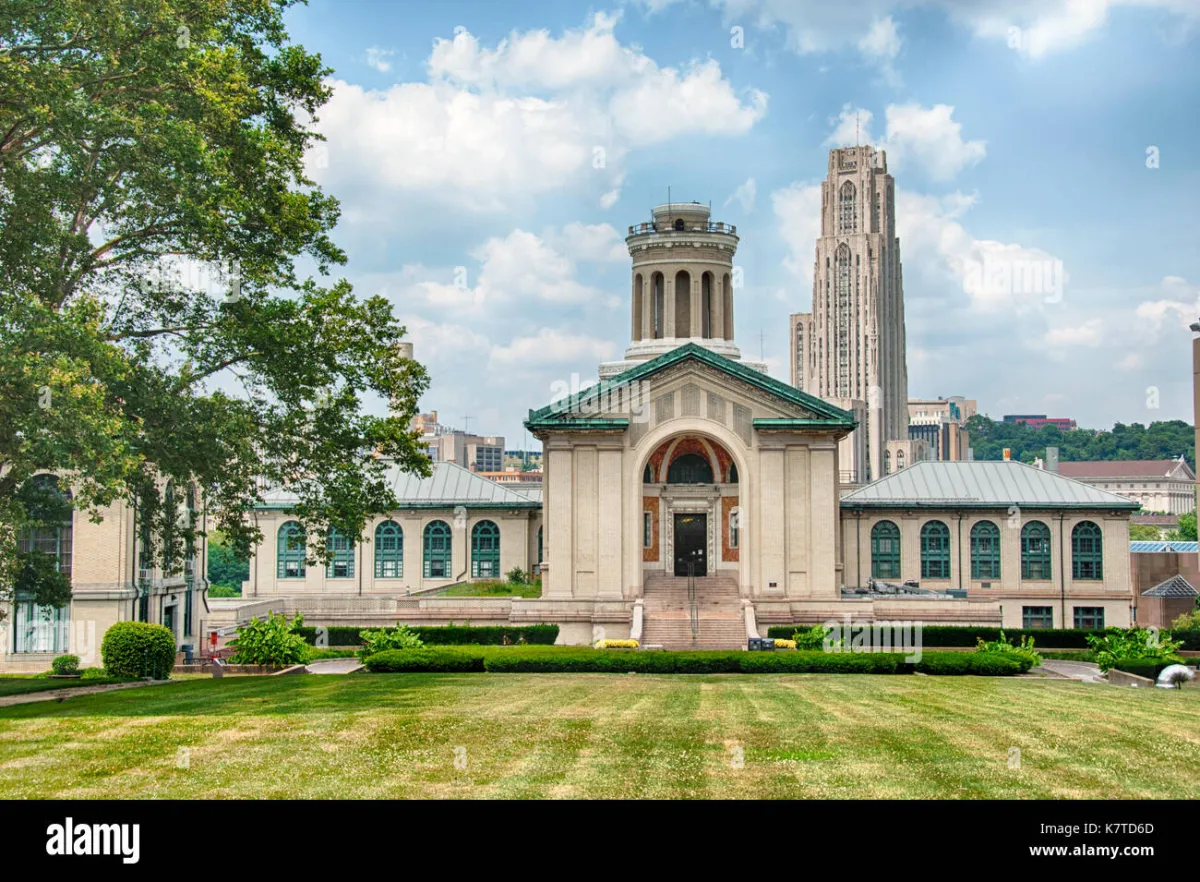 Photo: Carnegie Mellon, via c8.alamy.com
He opened the box and stood there for a long time.
What One Man Found in Another Man's Work
Serrano has spoken about that moment in several interviews over the years, and his description is consistent: he felt, looking at Czeski's drawings, the particular disorientation of encountering a mind that was working on problems you hadn't known anyone else was thinking about.
"He was solving things I was trying to solve," Serrano said in a 1989 profile. "He just didn't have the vocabulary to tell anyone about it."
Serrano spent months studying the drawings, cataloguing them, and — carefully, with what he has always described as a strong sense of ethical responsibility — incorporating their conceptual logic into his own developing practice. He was transparent about this, eventually writing about Czeski in an architectural journal in 1981 and donating the original drawings to Carnegie Mellon's architecture library, where they remain.
The influence shows up most clearly in three civic buildings Serrano designed in the late 1970s and 1980s — a public library in western Pennsylvania, a municipal complex in Ohio, and a transit hub in a mid-sized Midwestern city — all of which draw on spatial ideas that are traceable, directly, to the lunch-break sketches of a man who never once called himself a designer.
What It Means to Create Without an Audience
There's a question that hangs over Czeski's story, and it's not a comfortable one: did he know what he had?
Some people who knew him suggest he did, at least in part. A niece who visited him in the 1960s remembered him showing her the drawings with a kind of quiet pride, though he framed them simply as "my hobby." A coworker recalled him saying once that he drew the buildings because he couldn't stop thinking about them — that the ideas came whether he wanted them to or not, and putting them on paper was the only way to get any peace.
He never tried to show them to anyone in a position to do something with them. Whether that was humility, or doubt, or simply a practical sense of the distance between a Polish immigrant steel foreman and the world of American architecture, nobody can say for certain.
What's clear is that the work mattered to him independent of any outcome. He drew for thirty years with no audience and no prospect of one. He created because the alternative — not creating — apparently wasn't something he could manage.
The Buildings That Remember Him
Raymond Czeski's name doesn't appear on any building. It doesn't appear in most architectural histories. If you stand in the atrium of the Ohio municipal complex that Serrano designed — the one with the light shaft that pulls the afternoon sun all the way to the ground floor, the one that local residents consistently describe as feeling "alive" in a way they can't quite explain — you won't find a plaque for him.
But the idea is his. The light is his. The stubbornness of a man who kept drawing buildings he'd never see built, on paper he found in a steel mill, with a pencil he sharpened at a lunch table — that's his too.
Some legacies travel in straight lines. Some travel through other hands, through storage rooms, through the instincts of a 29-year-old architect who happened to open the right box on the right afternoon.
Either way, they arrive.