Lost at Sea, Found on Shore: The Sailor Who Accidentally Built a Town's Greatest Treasure
Lost at Sea, Found on Shore: The Sailor Who Accidentally Built a Town's Greatest Treasure
There's a particular kind of grief that comes from losing something irreplaceable — not a person, not a home, but the thing that made you you. For Elias Wren, a merchant sailor working the Atlantic trade routes in the 1840s, that thing was his books.
 Photo: Elias Wren, via images.squarespace-cdn.com
Wren wasn't famous. He didn't come from money. He wasn't a scholar or a politician or anyone history would normally bother remembering. He was a broad-shouldered man from coastal North Carolina who had spent the better part of two decades hauling cargo between port towns, and who had, in those same decades, quietly assembled one of the most extraordinary private book collections anyone in his circle had ever seen.
Then the sea took it all.
A Library Below the Waves
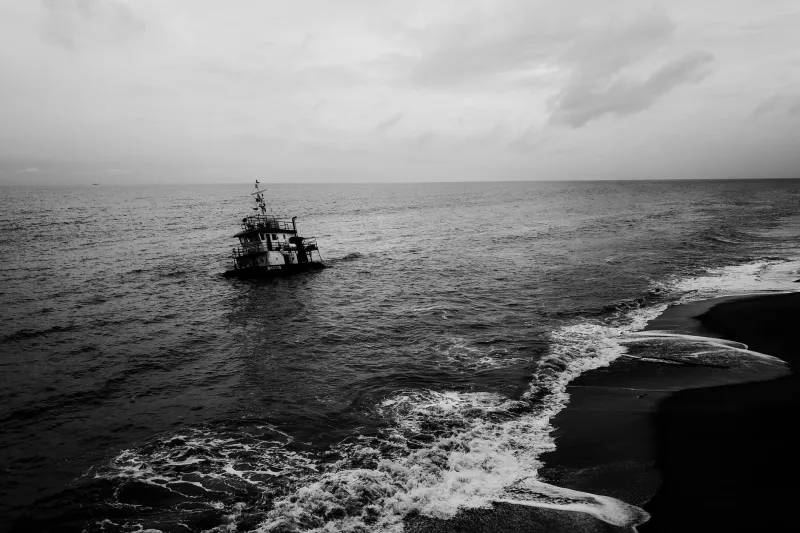
The wreck happened in the winter of 1847, somewhere off the Outer Banks — a stretch of barrier islands that had already claimed hundreds of ships and would claim hundreds more. The cargo vessel Wren was crewing struck a sandbar in a late-season storm and broke apart fast. The crew survived. The books did not.
By most accounts, Wren had accumulated somewhere between three hundred and four hundred volumes over the years — an astonishing number for a working sailor of modest means. He'd bought them in port cities up and down the eastern seaboard, traded for them, received them as payment for odd jobs, and in at least one documented case, pulled a waterlogged copy of Defoe's Robinson Crusoe out of a dockside trash heap and dried it page by page on a Charleston rooftop.
Losing that collection, people who knew him later said, broke something in him. But it also lit something.
The Man Who Couldn't Stop Collecting
Wren retired from sailing after the wreck — he was in his mid-forties by then, and the Carolina coast had made its point — and settled in the small fishing community of Harker's Island. He had no grand plan. He had a modest savings, a rented room above a chandler's shop, and a need that bordered on compulsion: he needed to be surrounded by books again.
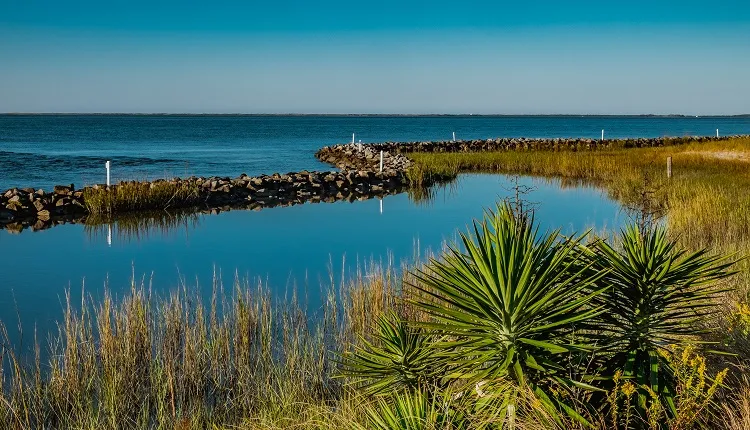 Photo: Harker's Island, via www.emeraldislerealty.com
So he started over.
But this time, something was different. Maybe it was age. Maybe it was the particular humility that comes from watching everything you've built disappear into the Atlantic. Whatever the reason, Wren didn't collect the way he used to — hoarding volumes for himself, stacking them in his cabin, reading by lantern light alone. This time, when neighbors came by and noticed the growing shelves, he didn't shoo them away.
He invited them in.
"Come back when you've finished it," he reportedly told a fisherman's teenage son who borrowed a copy of Washington Irving's Sketch Book in 1851. "And bring someone who hasn't read it yet."
It sounds almost too neat, the way history sometimes does. But that's more or less how Harker's Island ended up with a lending library.
One Room, Hundreds of Readers
It wasn't called a library at first. It wasn't called anything. It was just Elias Wren's room, and then Elias Wren's front parlor when he moved to a slightly larger place, and then a dedicated back room when a local merchant offered him the use of a small building on the edge of town after word spread about what he was doing.
By the mid-1850s, Wren had established something recognizable: a catalogued collection of over five hundred books, a rudimentary checkout system scratched into a ledger, and a standing invitation to anyone in the community — fishermen, their wives, children, freedmen living on the island's edges — to borrow what they liked, free of charge.
This was not a small thing. Public libraries in America were still a radical idea. The Boston Public Library, often cited as the nation's first major free public lending library, opened in 1854. What Wren built on Harker's Island wasn't on the same scale, obviously. But it was operating on the same principle, at roughly the same moment, in a place where no one would have predicted such a thing possible.
He funded it himself, mostly — through small donations he solicited from visiting merchants, through book drives he organized at the local Methodist church, and through the occasional sale of duplicate volumes. He never drew a salary. He never sought recognition from the state or the county. He just kept adding books and keeping the door open.
What Outlasts a Man
Wren died in 1879, somewhere in his late seventies, still living in the building that housed his collection. The books numbered over twelve hundred by then.
What happened next is the part of the story that feels almost fictional. Rather than dispersing the collection — selling it off, dividing it among relatives, letting it gather dust — the community of Harker's Island simply kept it going. A rotating group of local women took over the cataloguing. A new ledger was started. The door stayed open.
The collection survived the Civil War's aftermath, survived a hurricane in 1899 that damaged the building but not the books (they'd been moved to higher ground by neighbors who apparently understood what they had), and survived the slow economic decline that emptied out many small coastal communities in the early twentieth century.
A formal county library system eventually absorbed and expanded what Wren had built, but locals for generations continued to call it simply "the sailor's library" — a name that appears in county records as late as 1962.
The Unlikely Gift of Disaster
There's a version of Elias Wren's life where the shipwreck is just a tragedy. He loses his books, he grieves, he moves on, and history never hears his name.
But that's not what happened. The loss cracked him open in a way that solitary collecting never could have. It turned a private obsession into a public gift. It took something that had been entirely his and made it belong to everyone.
Wren never set out to build an institution. He set out to replace what he'd lost. And somewhere in that very human, very stubborn act of starting over, he built something that outlasted him by more than a century.
The sea took his library once. He made sure it couldn't take the next one.