Second Place, First in History: Eight Almost-Winners Who Ended Up Changing Everything

America loves a winner. The trophy, the podium, the headline — we hand them to the person who finishes first and move on. But history has a longer memory than a scoreboard. Spend enough time looking back at the people who almost made it, and a strange pattern emerges: the runner-up slot has a remarkable track record of producing the people who actually matter.
Here are eight Americans who came in second — and ended up going further than anyone who beat them.
1. William Jennings Bryan — The Losing Candidate Who Rewrote the Democratic Party
Bryan lost the presidential election three times. Three. In 1896, 1900, and 1908, he walked away without the White House, and the political class largely wrote him off as a perennial also-ran. What they missed was that Bryan was building something more durable than a single presidency: he was constructing the ideological architecture of modern American progressivism.
His campaigns introduced the radical idea that the federal government should actively protect ordinary workers and farmers against concentrated wealth. The platform that lost in 1896 became, piece by piece, the policy landscape of the twentieth century. Social security, income tax, direct election of senators — Bryan championed them all before they were popular. He didn't win the race. He designed the road.
2. Rosalind Franklin — The Scientist Who Didn't Get the Nobel
The story of DNA's discovery is one of science's most uncomfortable chapters. Rosalind Franklin's X-ray crystallography work — specifically her famous Photo 51 — provided the structural data that allowed Watson and Crick to propose the double helix model. The Nobel Prize went to Watson, Crick, and Wilkins in 1962. Franklin, who had died of cancer in 1958, wasn't eligible.
But Franklin's legacy outlasted the ceremony. Her meticulous methodology set a standard for structural biology that shaped generations of researchers. Her story, once it was properly told, became a touchstone for discussions about gender, credit, and scientific ethics that continue to reverberate through labs and universities today. Watson and Crick got the prize. Franklin changed the conversation.
3. Edwin Armstrong — The Radio Inventor Who Lost the Patent War and Won the Future
Edwin Armstrong invented FM radio. He also, for a large part of his adult life, lost. His patent battles with RCA and David Sarnoff became one of the most brutal legal fights in American technology history. Sarnoff's AM empire had the money, the lawyers, and the regulatory connections. Armstrong had the better technology and nowhere near enough resources to protect it.
He died in 1954, having never fully seen his invention vindicated. But FM radio didn't die with him. It eventually became the dominant broadcast format in America, delivering music with a clarity AM could never touch. Every time someone switches to their favorite FM station, they're living in Edwin Armstrong's second-place story.
4. Harold Stassen — The Man Who Kept Running and Changed Republican Politics Anyway
Harold Stassen sought the Republican presidential nomination nine times. He became a national punchline, the perennial candidate who couldn't take a hint. What gets lost in the mockery is that Stassen was, at various points in his career, genuinely influential. As governor of Minnesota, he pioneered moderate Republicanism. He worked on the United Nations charter. He was an arms control advocate when that position was deeply unfashionable in his party.
His persistence, ridiculous as it looked from the outside, kept a strain of Republican moderation visible during decades when it might otherwise have vanished entirely. He didn't win. But he showed up, every time, and that mattered more than the scoreboard suggested.
5. Nikola Tesla — The Inventor Who Lost the Current War
Thomas Edison won the public relations battle of the current wars. Direct current, Edison's preferred system, lost the technical argument to Tesla's alternating current — but Edison was better at business, better at credit-claiming, and better at making sure history remembered his name first.
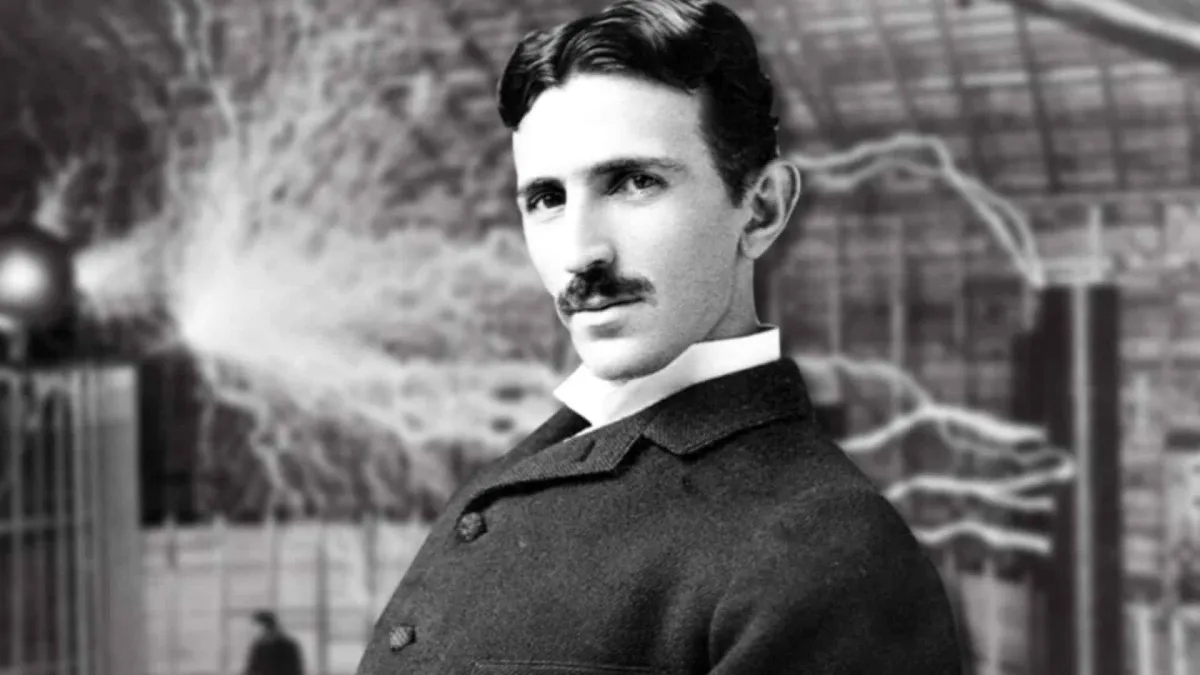 Photo: Nikola Tesla, via www.planetegrandesecoles.com
Tesla died broke and largely forgotten in a New York hotel room. Edison died celebrated. But the electrical infrastructure of modern America runs on Tesla's principles. Every outlet in every home is a monument to the man who finished second in the story America told itself about electricity.
6. Ralph Nader — The Presidential Candidate Who Changed Cars, Courts, and Consumer Rights
Nader ran for president multiple times and never came close to winning. His 2000 campaign became particularly controversial, blamed by some for siphoning votes in Florida. But Nader's real legacy had nothing to do with the Oval Office. His 1965 book Unsafe at Any Speed forced the auto industry to reckon with safety in ways it never had before. The consumer protection movement he helped build produced the seatbelt laws, the safety regulations, and the watchdog organizations that have saved countless American lives.
He never won an election. He changed the physical design of the cars Americans drive.
7. Susan B. Anthony — The Suffragist Who Didn't Live to Vote
Anthony spent decades fighting for women's right to vote and died in 1906, fourteen years before the Nineteenth Amendment passed. She didn't finish first. She didn't finish at all, in the conventional sense. She was arrested for voting illegally in 1872 and spent her final years knowing she might never see the movement succeed.
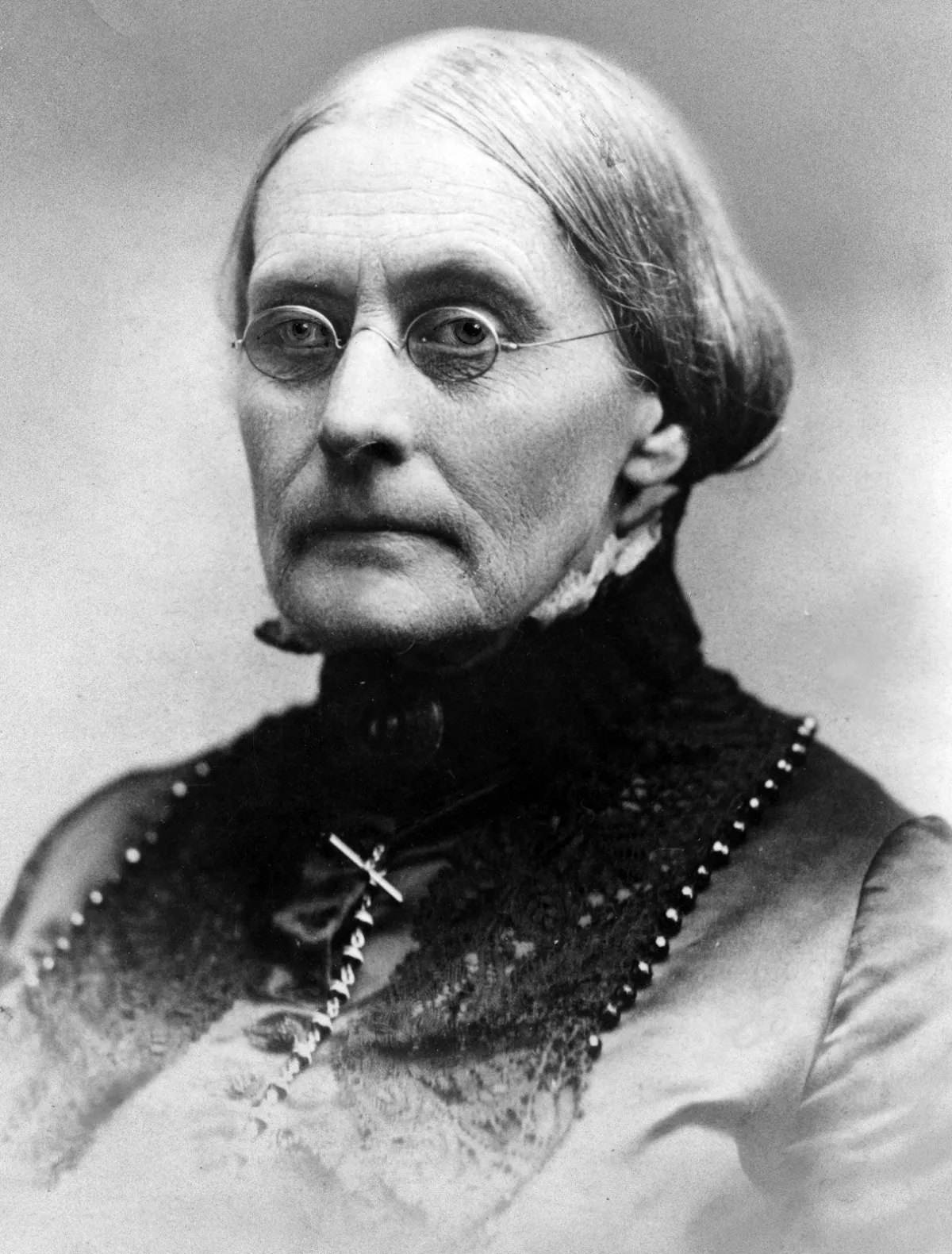 Photo: Susan B. Anthony, via cdn.britannica.com
But the amendment was informally called the Susan B. Anthony Amendment before it was ratified. Her organizational work, her speaking tours, her relentless documentation of the cause created the infrastructure that made victory possible. She was the runner-up to history. History named the victory after her anyway.
8. Philo Farnsworth — The Farm Boy Who Invented Television and Lost Everything
Philo Farnsworth drew his idea for electronic television in the dirt of an Idaho potato field at the age of fourteen. He developed the technology, filed the patents, and watched RCA — led again by the indomitable David Sarnoff — wage a legal and commercial war that ultimately stripped him of the credit and most of the financial reward.
RCA's version of television dominated the market. Farnsworth's name disappeared from the popular history of the medium. But his fundamental patents were eventually upheld, and the technical principles he developed as a teenager in Idaho are the foundation on which every television ever made was built.
He didn't get the fame or the fortune. He got the invention.
The View From Second Place
There's something the winner gets that the runner-up doesn't: the pressure to defend the title. First place comes with obligations — to shareholders, to voters, to the narrative that made the win possible. Second place comes with something rarer. Freedom.
Freedom to keep building. Freedom to keep trying. Freedom to outlast the moment that defined everyone else and find out what comes next.
History, it turns out, has a soft spot for the stubborn people who didn't quite win the first time.