The Night Shift Nobody Watched: How a Custodian Saw What Silicon Valley's Best Minds Missed

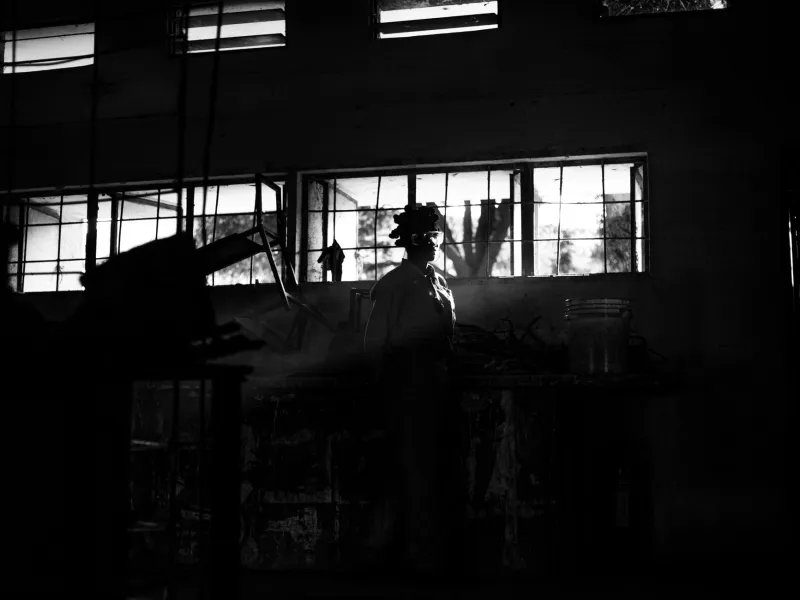
Photo by Photo by Martin Laprise on Unsplash on Unsplash
The Guy Nobody Noticed
Every great tech campus has a mythology. The origin story told at all-hands meetings, the legendary late night when someone scrawled the billion-dollar idea on a napkin. What those stories almost never include is the person pushing a mop cart past the conference room at 2 a.m., watching it all happen.
Ruben Castillo wasn't supposed to change anything. He was hired to keep things clean — the floors, the break rooms, the glass walls of the engineering pods at a mid-size hardware startup in San Jose that most people outside the industry had never heard of. He worked the overnight shift, starting at eleven and finishing just before the first wave of badge-ins at seven. He was quiet. He was reliable. And for two years, he was almost entirely invisible.
That invisibility turned out to be the most important credential he ever had.
What the Engineers Kept Getting Wrong
The company — we'll call it what insiders called it, simply "the shop" — was deep in development on a thermal management system for server hardware. The engineers were brilliant, credentialed, and stuck. They kept hitting the same wall: a heat dissipation problem that their models predicted one way and their physical prototypes demonstrated another. The gap between theory and hardware was eating months of runway and burning through morale.
Meetings were held. Consultants were brought in. Whiteboards were filled, erased, and filled again. The lead engineer later described the period as "a slow, expensive argument with physics."
Castillo, meanwhile, was emptying the trash cans from those same meetings. And he was reading what got thrown away.
Not deliberately at first. But when you clean the same rooms every night, you start to notice patterns. He noticed that the engineers kept printing the same diagrams over and over with minor variations. He noticed that certain configurations got circled and then crossed out. He noticed that one particular design kept reappearing — slightly different each time, always discarded.
He didn't have an engineering degree. He had a high school diploma from a school in Fresno and two years of community college before family circumstances pulled him into the workforce. But he had grown up helping his uncle repair refrigeration units, and something about those crossed-out diagrams nagged at him in a way he couldn't immediately explain.
The Note on the Whiteboard
For weeks, he said nothing. He wasn't sure he had the standing to say anything. The culture of the place, like a lot of early-stage tech shops, had a clear and unspoken hierarchy. You were either an engineer or you were support staff, and those two worlds rarely intersected in any meaningful way.
But the diagrams kept bothering him. One night in March, after everyone had gone home, he stood in front of one of the whiteboards for a long time. Then he did something that took more courage than most people will ever fully appreciate: he picked up a marker and left a note.
It wasn't a solution. It was a question. Three words and a rough sketch, asking whether the team had considered the orientation of the component from the angle his uncle used to call "letting the cold fall where it wants to go."
The lead engineer, arriving early the next morning, almost erased it. She assumed it was a leftover from the previous day's session. But something made her stop. She stared at the sketch. She took a photo of it on her phone. She sent it to two colleagues before she'd even poured her coffee.
By noon, they had a working hypothesis. By the end of the week, they had a prototype that finally behaved the way the models said it should.
What Happens When the Unlikely Person Gets Credit
Castillo's role in the breakthrough didn't become public immediately. The company filed a patent, ran tests, and spent several months validating the approach before anyone thought carefully about attribution. When the lead engineer finally tracked him down — in the parking lot, after his shift — she said she'd been trying to figure out how to have the conversation for two months.
He was offered a formal consulting role. He was listed as a contributing inventor on the patent application. He was, by every account from the people who were there, genuinely embarrassed by the attention.
What he told the engineer that morning in the parking lot has become something of a quiet legend in the company's internal culture. He said he wasn't sure he'd seen anything special. He said he'd just noticed what was already there.
That, it turns out, is the whole story.
The Outsider Advantage Nobody Talks About
There's a well-documented phenomenon in innovation research sometimes called the "outsider effect" — the tendency for people without deep expertise in a field to occasionally solve problems that specialists can't, precisely because they haven't been trained to see the problem the same way. They haven't absorbed the assumptions. They haven't inherited the blind spots.
Castillo had none of the engineering team's preconceptions. He didn't know which solutions were supposed to be impossible. He only knew what the discarded drawings looked like, and what a refrigeration unit in Fresno had taught him about the way cold air moves.
The lead engineer, who went on to become one of the more respected voices in thermal systems design, has talked about the experience in a handful of interviews over the years. She always makes the same point. The problem wasn't that the engineers were bad at their jobs. The problem was that they were too good at thinking like engineers.
Sometimes the most useful perspective in the room is the one that doesn't belong there.
The Likely Last Word
Ruben Castillo still works in facilities management. He didn't pivot into a tech career, didn't launch a startup, didn't become a keynote speaker. He took the consulting fee, used some of it to help his mother with her mortgage, and went back to doing the work he's always done.
But somewhere in a patent database, his name is attached to an idea that now runs inside server infrastructure across three continents. The person who sees you least clearly is sometimes the person who sees your problem most honestly. And the most important innovation of any given year might be the one that started with someone nobody was watching, asking a question nobody thought to ask.
The overnight shift has a way of revealing things the daylight misses.