The Question That Started Everything
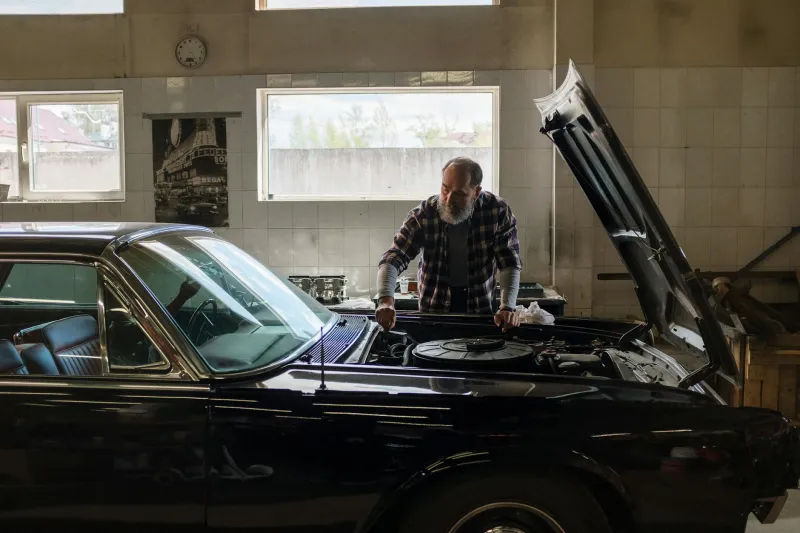
Tommy Rodriguez was elbow-deep in a transmission rebuild when his world collapsed. The call came on a Tuesday afternoon in 1987—his eight-year-old daughter Maria had been rushed to the hospital with symptoms that made no sense. Severe fatigue, unexplained muscle weakness, and a collection of other issues that seemed unrelated. The doctors were baffled.
For three months, specialists ran test after test. They threw around terms like "rare metabolic disorder" and "idiopathic condition"—medical speak for "we have no idea." Maria's condition worsened. The Rodriguez family watched helplessly as their vibrant little girl faded before their eyes.
Then Maria died. And Tommy Rodriguez, a man who had spent his life fixing things that were broken, decided he was going to fix this too.
The Mechanic Becomes a Medical Detective
What happened next defied every assumption about who gets to challenge medical orthodoxy. Rodriguez, armed with nothing but a high school diploma and an obsessive need for answers, began what would become a fifteen-year investigation into his daughter's death.
He started where any good mechanic would—by gathering data. Rodriguez obtained Maria's complete medical records, then began reaching out to other families who had lost children to similar mysterious symptoms. What he found was a pattern that the medical establishment had somehow missed.
"I approached it like diagnosing a car problem," Rodriguez later explained. "You look at all the symptoms, you trace the connections, and you don't stop until you find the root cause."
His kitchen table became mission control. Medical journals, research papers, and case studies covered every surface. Rodriguez taught himself medical terminology, biochemistry, and diagnostic methodology. He corresponded with researchers around the world, often pretending to be a medical professional to get access to information.
The Breakthrough Nobody Saw Coming
By 1995, Rodriguez had identified seventeen cases that matched his daughter's symptoms perfectly. More importantly, he had noticed something that trained physicians had overlooked: all the children had been exposed to a specific combination of environmental factors during critical developmental periods.
His theory was radical. Rodriguez proposed that what doctors had been treating as separate, unrelated conditions were actually manifestations of a single syndrome caused by the interaction between genetic predisposition and environmental triggers. He called it Environmental Metabolic Disruption Syndrome (EMDS).
The medical community's initial response was predictable. Who was this mechanic to challenge decades of medical knowledge? Rodriguez faced rejection after rejection when he tried to publish his findings. Medical journals wouldn't even review papers from someone without proper credentials.
But Rodriguez had something many researchers lacked: the desperate determination of a grieving father and the practical problem-solving skills of someone who fixed things for a living.
When the Outsider Proves Right
The breakthrough came in 1998 when Dr. Sarah Chen, a pediatric researcher at Johns Hopkins, agreed to review Rodriguez's work. What she found shocked her. His methodology was sound, his data was comprehensive, and his conclusions were not only plausible—they were provable.
Chen became Rodriguez's first academic ally. Together, they designed a study that would test his theory. The results were undeniable. EMDS was real, and Rodriguez had been right all along.
The vindication was swift and overwhelming. Medical journals that had previously ignored Rodriguez suddenly wanted to publish his work. Hospitals began implementing new diagnostic protocols based on his research. The syndrome he had identified was renamed Rodriguez-Chen Syndrome in honor of both the mechanic who discovered it and the doctor who helped prove it.
The Ripple Effect of Raw Determination
Today, Rodriguez-Chen Syndrome is recognized in medical textbooks worldwide. Early identification and treatment have saved thousands of lives—children who might have suffered Maria's fate now receive proper diagnosis and care.
Rodriguez never returned to fixing transmissions. Instead, he founded the Rodriguez Foundation, which supports families dealing with rare diseases and funds research into environmental factors in childhood illness. He also established a program that encourages medical professionals to take seriously the observations of patients and families, regardless of their educational background.
"The medical establishment taught me that credentials matter more than curiosity," Rodriguez reflects. "But Maria taught me that love and determination can move mountains—even mountains of institutional resistance."
The Lessons of an Unlikely Detective
Rodriguez's story challenges fundamental assumptions about expertise and authority. His success came not despite his lack of formal medical training, but because of his outsider's perspective. He wasn't constrained by medical orthodoxy or professional blind spots. He saw patterns that others missed because he was looking with different eyes.
His journey also reveals something profound about the nature of discovery. Sometimes the most important breakthroughs come not from laboratories or universities, but from kitchen tables and broken hearts. Sometimes the person best equipped to solve a problem is the one who refuses to accept that it can't be solved.
Tommy Rodriguez proved that in America, expertise isn't always about degrees on the wall. Sometimes it's about grease-stained hands that won't stop working until they find the answer. Sometimes the most unlikely person in the room turns out to be exactly the right one.