The Captain's Obsession
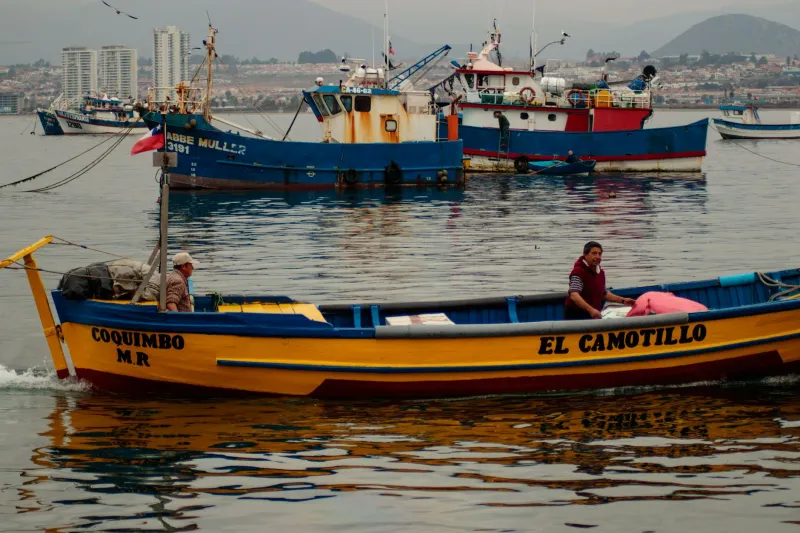
Every morning for forty-three years, Captain Frank Morrison would climb aboard his thirty-six-foot lobster boat Sarah's Dream and head into the North Atlantic waters off Maine's rugged coast. While other fishermen focused on the day's catch, Morrison had developed what his crew called "the Captain's strange habit" — filling notebook after notebook with observations that seemed to have nothing to do with hauling traps.
Water temperature at different depths. Current patterns that shifted with the seasons. The precise locations where he spotted unusual sea life. The exact coordinates where his depth finder showed unexpected underwater formations. Most fishermen trusted their instincts and decades of experience. Morrison trusted his instincts and wrote everything down.
"Frank was different," recalls Bobby Chen, who worked Morrison's boat for twelve seasons. "While we're pulling up lobsters, he's scribbling notes about water clarity and asking us if we noticed the kelp looked different than last month. We thought he was just peculiar."
Peculiar, perhaps. But Morrison's peculiarity would eventually rewrite marine science textbooks.
When Necessity Breeds Discovery
Morrison's record-keeping began out of pure practicality. In 1979, a brutal winter storm had destroyed most of his traps, wiping out nearly his entire investment. Desperate to rebuild efficiently, he started mapping exactly where he'd had success — not just general areas, but precise GPS coordinates, water depths, and bottom compositions.
"I couldn't afford to guess anymore," Morrison explained in a 2018 interview. "Every trap had to count, so I started paying attention to everything."
What began as economic survival evolved into something approaching scientific obsession. Morrison noticed patterns that didn't match the conventional wisdom passed down through generations of Maine fishermen. Lobsters weren't where the old-timers said they should be. Water temperatures varied dramatically in ways that seemed to follow underwater geography no one had mapped.
So Morrison started mapping it himself.
Using a consumer-grade depth finder and an old GPS unit, he began creating detailed charts of the ocean floor. Every unusual reading got recorded. Every unexpected discovery got documented. By the mid-1990s, Morrison had accumulated what amounted to the most comprehensive survey of Maine's coastal waters ever compiled by a single individual.
The Academic Awakening
Dr. Sarah Hendricks first heard about Morrison in 2003 during a frustrating research project at the Woods Hole Oceanographic Institution. Her team was struggling to understand why their computer models of North Atlantic currents kept producing results that didn't match their field observations.
"We had all this sophisticated equipment and years of training," Hendricks recalls, "but we were missing something fundamental about how these waters actually behave."
A colleague mentioned hearing about a lobsterman in Maine who claimed to have detailed records of current patterns going back decades. Hendricks was skeptical — until she saw Morrison's notebooks.
"I expected to find the kind of rough notes you'd expect from someone without formal scientific training," she says. "Instead, I found data collection that was more systematic and comprehensive than most of our graduate students produce."
Morrison's records revealed underwater topography that official nautical charts had missed entirely. His temperature readings, taken at consistent locations over decades, showed seasonal patterns that contradicted established oceanographic models. Most remarkably, his observations of marine life distribution suggested the existence of deep-water ecosystems that scientists hadn't known existed.
Rewriting the Maps
The collaboration between Morrison and Woods Hole began cautiously. Academic institutions aren't typically eager to partner with commercial fishermen who lack advanced degrees. But Morrison's data was too valuable to ignore.
"Frank knew those waters better than anyone with a PhD ever could," admits Dr. Michael Torres, who joined the project in 2004. "He'd spent four decades out there in all conditions, paying attention to details we only visit occasionally with expensive equipment."
The partnership revolutionized both Morrison's fishing operation and Woods Hole's research capabilities. Morrison gained access to sophisticated instruments that could verify and expand his observations. The scientists gained access to longitudinal data that would have taken them decades to collect independently.
Together, they discovered previously unknown underwater canyons that created unique current patterns. They identified seasonal migration routes for deep-water species that had never been documented. Most significantly, they found evidence of climate change impacts on ocean temperature and chemistry that pre-dated official scientific recognition by nearly two decades.
The Fisherman's Legacy
Morrison retired from commercial fishing in 2019, but his influence on marine science continues. The Morrison Dataset, as it's now known in academic circles, has been cited in over 200 research papers. His mapping techniques have been adopted by fishing operations throughout New England. The National Oceanic and Atmospheric Administration now actively recruits experienced fishermen to contribute observational data to official research projects.
"Frank proved that expertise doesn't always come with credentials," reflects Dr. Hendricks, who now directs the Citizen Science Initiative at Woods Hole. "Sometimes the person who knows the most about a place is simply the person who's been paying attention the longest."
Morrison's story illustrates a profound truth about discovery: the most important observations often come from the people who are present, persistent, and curious enough to notice what others overlook. While marine biologists were developing theories about ocean behavior, Morrison was out there every day, watching the ocean behave.
His notebooks, now preserved in Woods Hole's archives, represent more than four decades of meticulous observation. They remind us that science isn't just what happens in laboratories — it's what happens when human curiosity meets careful attention to the world around us.
In Morrison's case, that curiosity happened to map the ocean floor, one logbook entry at a time.