Dirt Roads to Discovery: The High School Dropout Who Rewrote American History
The Kid Who Couldn't Sit Still
Tommy Martinez was seventeen when he decided classrooms weren't for him. It wasn't rebellion or poor grades that drove him away from Lincoln High in Albuquerque — it was the suffocating certainty that four walls and a chalkboard couldn't contain what he needed to learn. So in 1967, he walked out during third period and never looked back.
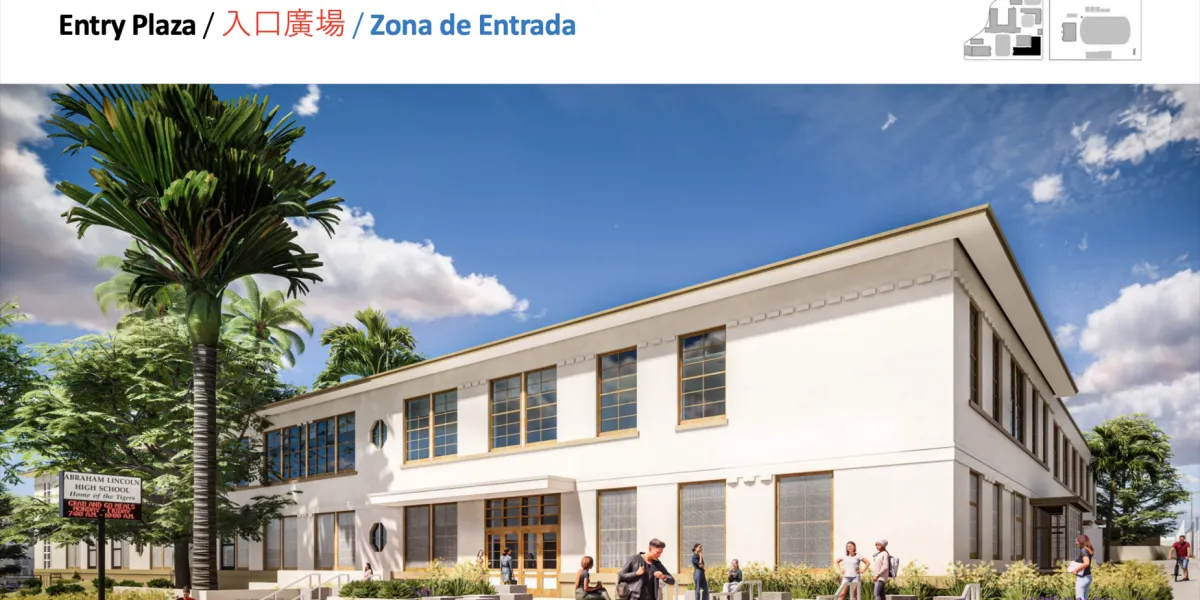 Photo: Lincoln High, via 3.files.edl.io
What followed were two decades of honest work with calloused hands. Martinez drifted through construction crews across the Southwest, laying pipe in Phoenix, pouring concrete in Tucson, and digging foundations wherever the next job called. His coworkers knew him as reliable, quiet, and possessed of an unusual curiosity about the things his shovel turned up.
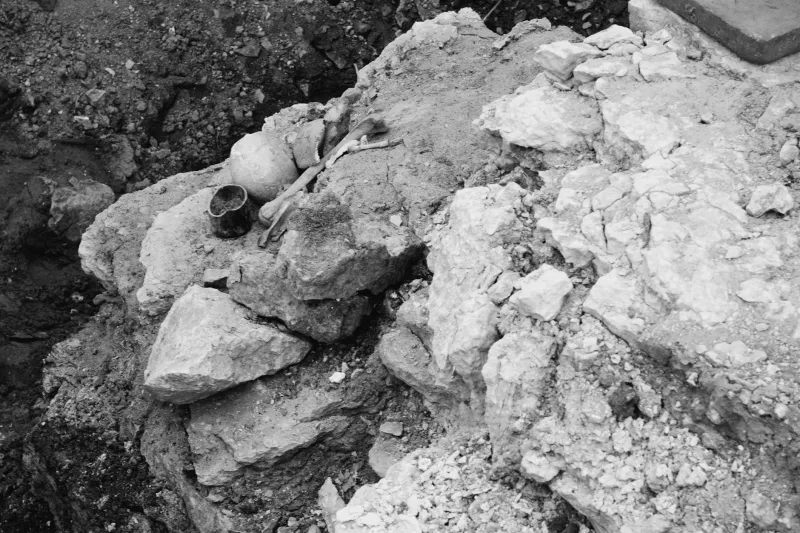
"Tommy always stopped to look at what he found," recalls Frank Gutierrez, who worked alongside Martinez on a housing development outside Santa Fe in the early 1980s. "Pottery shards, old tools, bones — most of us would just toss them aside and keep digging. Tommy would pocket them, study them during lunch breaks."
The Accidental Archaeologist
It was this habit that changed everything in 1987. Martinez was working on a water main extension project in the Galisteo Basin when his backhoe blade struck something that didn't belong. What emerged from the New Mexico earth wasn't another broken bottle or rusted can, but a perfectly preserved ceramic vessel, its geometric patterns still vivid after centuries underground.
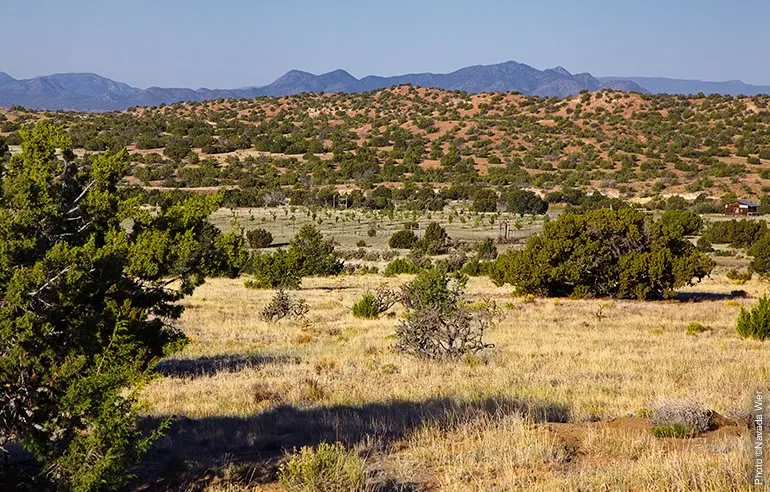 Photo: Galisteo Basin, via sharingsantafe.com
Most workers would have reported the find to their supervisor and moved on. Martinez did something different. He carefully photographed the vessel's position, mapped its location, and spent his weekend researching similar artifacts at the local library. What he discovered made him call the University of New Mexico's archaeology department.
Dr. Sarah Chen, then a junior professor, remembers the call. "This construction worker was describing pre-Columbian pottery with the precision of a trained field archaeologist. He knew exactly what he'd found and why it mattered. It was extraordinary."
Breaking the Academic Code
What Martinez had stumbled upon was the edge of what would become known as the Galisteo Complex — the largest undisturbed Ancestral Puebloan settlement discovered in the American Southwest. But his real breakthrough wasn't the initial find; it was how he read the landscape.
While credentialed archaeologists had been searching for major settlements in obvious places — near rivers, on defensive high ground, in areas with clear agricultural potential — Martinez saw patterns they missed. His years of reading terrain for construction projects had taught him to think like water, to understand how ancient peoples might have moved across the land.
"Academic training can create blind spots," explains Dr. Chen, who became Martinez's closest collaborator. "We're taught to look for certain markers, to follow established methodologies. Tommy looked at the same landscape and saw possibilities we'd dismissed."
The Outsider's Advantage
Martinez's lack of formal archaeological training became his greatest asset. While university teams debated theories about trade routes and settlement patterns, he was crawling through arroyos, following barely visible depressions that might once have been paths. He identified seventeen related sites across a thirty-mile radius — each discovery adding pieces to a puzzle that revealed a sophisticated civilization far more complex than anyone had imagined.
The Galisteo Complex, as reconstructed through Martinez's discoveries, housed an estimated 10,000 people at its peak around 1300 CE. The settlement included advanced water management systems, multi-story residential complexes, and evidence of trade networks stretching from present-day Mexico to Colorado.
"Tommy didn't just find artifacts," says Dr. Michael Running Bear, a Pueblo scholar who joined the excavation team. "He found a lost world. And he did it by thinking like the people who built it, not like the textbooks that tried to explain it."
Recognition and Resistance
Martinez's work didn't immediately win academic acceptance. His methods — intuitive, unconventional, guided more by landscape reading than established protocol — challenged how archaeology was supposed to be done. Several prominent researchers initially dismissed his findings as "amateur hour."
But the artifacts didn't lie. Carbon dating confirmed the age and significance of Martinez's discoveries. Ground-penetrating radar validated his site identifications. Slowly, grudgingly, the academic establishment acknowledged that a high school dropout had rewritten Southwestern archaeology.
In 1994, Martinez was awarded an honorary doctorate from the University of New Mexico. In 2003, the American Archaeological Association created the Martinez Award for Outstanding Contributions by a Non-Academic Researcher. The Smithsonian Institution houses the largest collection of artifacts from his discoveries.
The Lesson in the Dirt
Today, at seventy-three, Martinez divides his time between ongoing excavations and mentoring young archaeologists. His advice to them is simple: "Stop looking where you're supposed to look. Start looking where the land tells you to look."
The Galisteo Complex remains active research site, with new discoveries emerging each season. Martinez's initial hunch — that major settlements existed in areas dismissed by conventional wisdom — has proven correct again and again.
His story challenges comfortable assumptions about expertise and education. Sometimes the most important discoveries come not from those trained to find them, but from those curious enough to recognize them when they appear. In Martinez's case, a restless teenager's decision to leave school led to one of the most significant archaeological discoveries in American history.
The dropout who couldn't sit still in a classroom spent fifty years reading the greatest textbook of all — the earth itself. And in its pages, he found civilizations that academic archaeology had overlooked for generations.