The Dreamer Nobody Hired
In 1916, Norman Bel Geddes walked out of the Cleveland Institute of Art with nothing to show for his time except a pile of rejection letters and some professors who thought his ideas were "impractical fantasies." Twenty-three years later, he would unveil a vision that would reshape America more dramatically than any single infrastructure project in history.
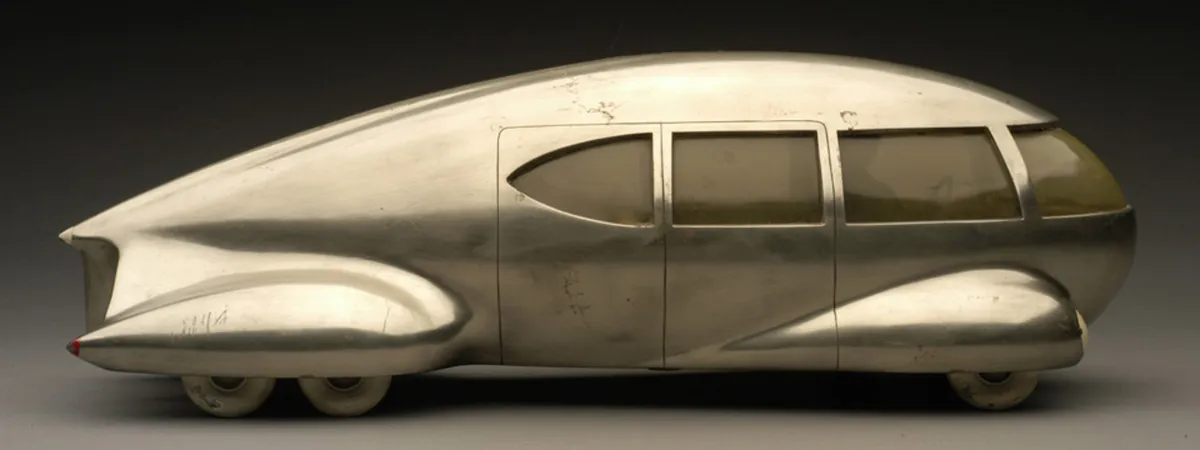 Photo: Norman Bel Geddes, via www.mcny.org
Bel Geddes wasn't an engineer. He wasn't a city planner. He was barely even a successful artist. What he was, however, was obsessed with a simple question: What if America could move?
The Futurama That Started It All
At the 1939 World's Fair in New York, while other exhibits showcased new appliances and scientific marvels, Bel Geddes built something different. His "Futurama" pavilion featured a massive scale model of America in 1960 — complete with multilane highways connecting every major city, elevated roadways swooping through urban centers, and traffic flowing smoothly at speeds that seemed impossible.
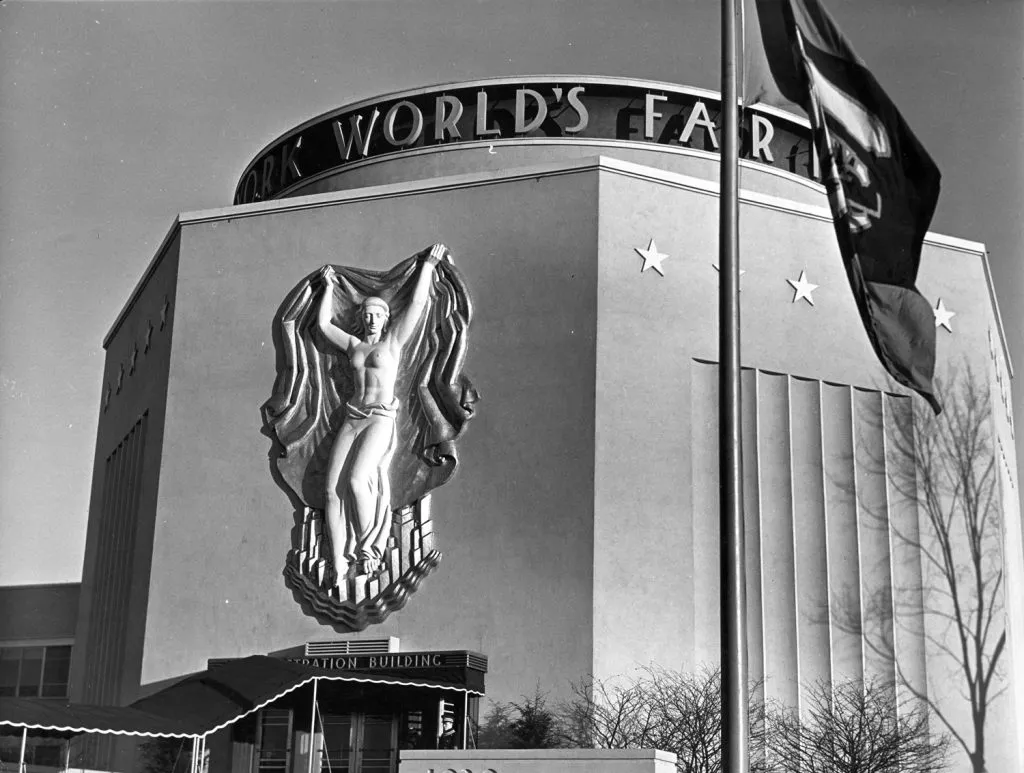 Photo: 1939 World's Fair in New York, via static.life.com
Visitors rode moving chairs through the exhibit, peering down at this imagined future while a narrator described a world where distance had been conquered. More than 5 million people experienced Futurama during the fair's two-year run. They left with buttons that read "I have seen the future."
Most thought it was science fiction. Bel Geddes knew it was a blueprint.
The Art of Selling the Impossible
What made Bel Geddes different wasn't his engineering knowledge — he had almost none. It was his ability to help people see what didn't exist yet. While highway advocates had been pushing technical arguments about traffic flow and economic benefits for decades, Bel Geddes painted pictures.
His 1940 book "Magic Motorways" wasn't filled with charts and statistics. Instead, it showed families driving cross-country in hours instead of days. It depicted farmers reaching distant markets with ease. It imagined young people from small towns having access to opportunities in far-off cities.
The book became a bestseller, not because Americans understood traffic engineering, but because Bel Geddes made them feel what a connected country could be like.
When Washington Finally Listened
By the early 1950s, America's roads were choking on their own success. Post-war prosperity had put more cars on increasingly inadequate highways. Traffic jams stretched for miles. Cross-country travel remained an adventure fraught with delays and detours.
President Eisenhower, remembering his own grueling cross-country military convoy in 1919 and impressed by Germany's autobahn system, began pushing for a national highway program. But he needed to sell it to a skeptical Congress and an American public wary of massive federal spending.
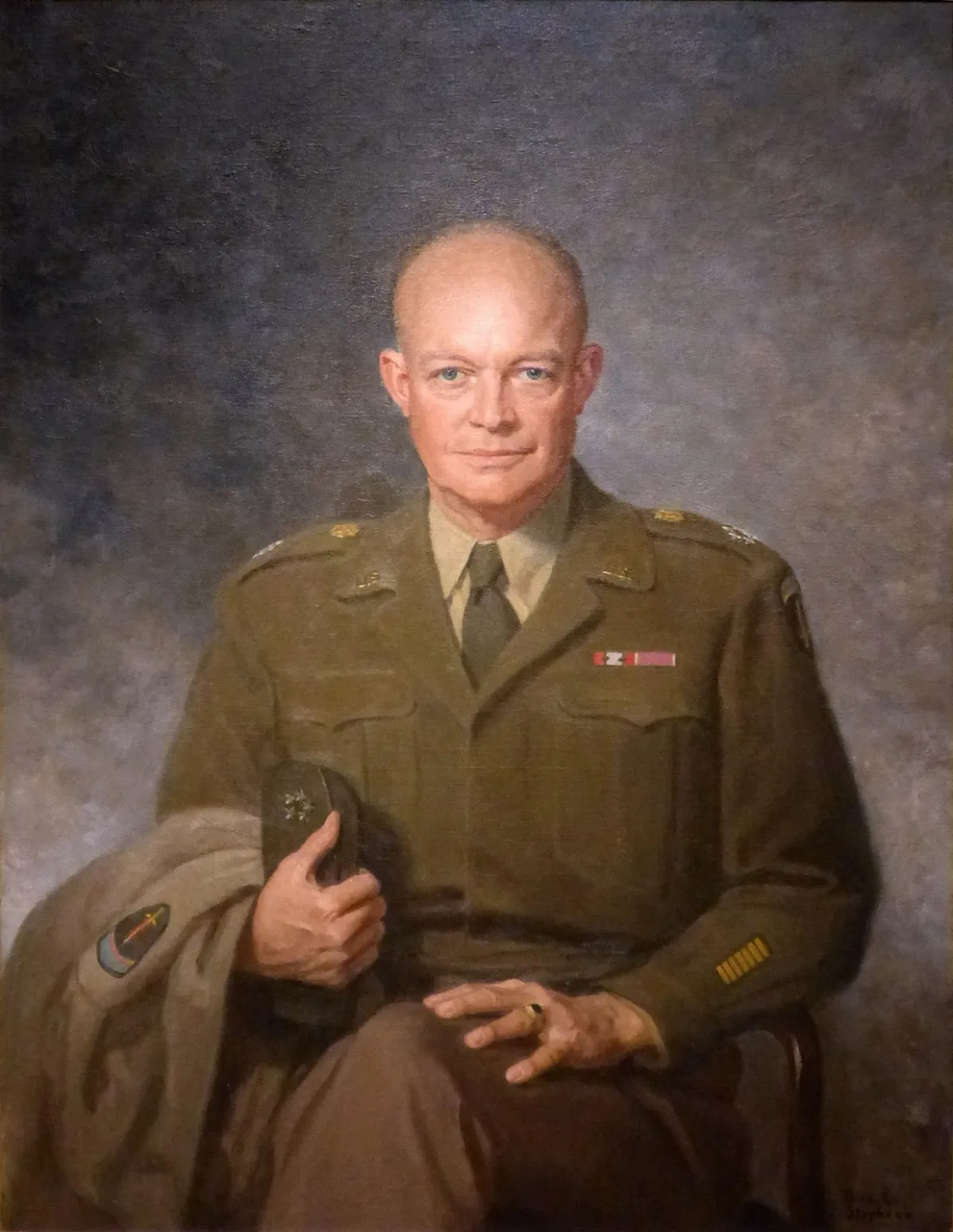 Photo: President Eisenhower, via 2.bp.blogspot.com
The arguments that finally worked weren't about traffic statistics or economic projections. They were about vision — the same kind of sweeping, transformative vision that Bel Geddes had been painting for nearly two decades.
The Outsider's Advantage
Bel Geddes succeeded where trained engineers and urban planners had failed because he wasn't constrained by what was supposed to be possible. He didn't know enough about road construction to understand why his ideas were "impractical." He just knew what he wanted America to look like.
This ignorance was actually his greatest asset. While experts argued about grade percentages and right-of-way acquisition, Bel Geddes focused on the bigger picture: a country where geographic barriers no longer determined economic opportunity.
The Legacy of a Failed Artist
The Federal-Aid Highway Act of 1956 authorized construction of 41,000 miles of interstate highways — the largest public works project in American history. The system that emerged looked remarkably similar to what visitors had seen in Futurama seventeen years earlier.
Those highways didn't just move cars; they moved America itself. They enabled the growth of suburbs, the rise of chain restaurants and motels, the development of long-distance trucking, and the economic integration of regions that had been largely isolated from each other.
They also enabled white flight from urban centers, contributed to the decline of public transportation, and carved through minority neighborhoods in ways that deepened racial and economic segregation. Bel Geddes' vision was transformative, but like most transformations, it came with costs he hadn't anticipated.
When Dreams Become Roads
Bel Geddes died in 1958, just as construction of his highway system was beginning in earnest. He never got to drive on the interstates his imagination had helped create. But every American who has ever taken a road trip, moved across the country for a job, or simply driven to work on a highway owes something to the art school dropout who refused to accept that his dreams were too big.
The Interstate Highway System stands as proof that sometimes the most important infrastructure isn't built by engineers — it's envisioned by dreamers who don't know enough to understand why their dreams are impossible.
In a country built on the idea that anyone can make it, perhaps it's fitting that our most transformative public works project began as sketches in the notebook of someone nobody expected to succeed.