The Beekeeper Who Stumbled Into a Billion-Dollar Business He Never Meant to Start
The $500 Gamble That Changed Everything
In 1978, Gary Thompson was what you might generously call a professional failure. He'd been fired from three teaching jobs, washed out of trucking after crashing two rigs, and his wife had just served him divorce papers along with his morning coffee. At 34, with $500 in his checking account and nowhere left to fall, he did what desperate men do: he made the worst financial decision of his life.
He bought a farm.
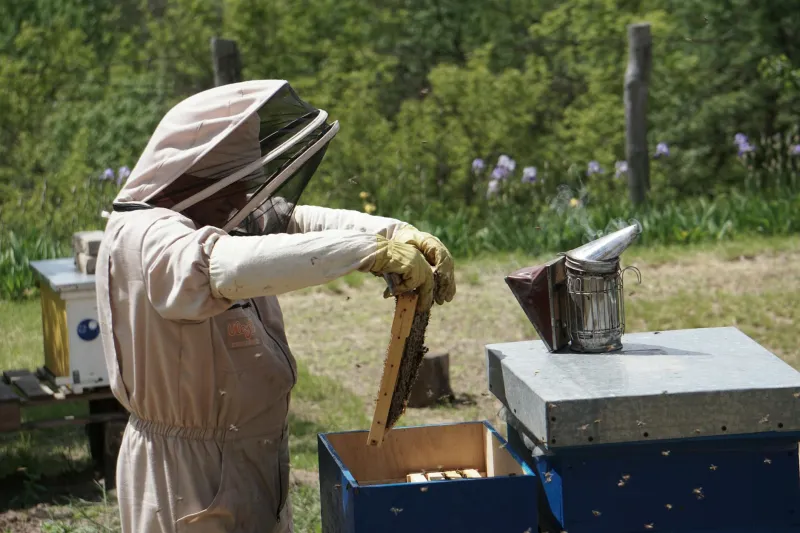
Not just any farm—a 40-acre disaster in rural Tennessee that the bank was practically giving away. The previous owner had died, leaving behind a property so run-down that real estate agents refused to show it. The house had no heat, the barn was falling over, and the only thing thriving on the entire spread was a single, angry beehive that nobody wanted to deal with.
"I figured if I was going to be broke, I might as well be broke somewhere with space to think," Thompson would later tell reporters. What he didn't figure was that the bees would do the thinking for him.
The Education of an Accidental Apiarist
Most people would have called an exterminator. Thompson, broke and curious, called the local library instead. He checked out every book on beekeeping they had—all three of them—and spent his first winter reading about creatures he'd never paid attention to before.
The more he learned, the more fascinated he became. Bees weren't just insects; they were tiny engineers running a complex operation that made most human businesses look like amateur hour. They had supply chains, quality control, and a work ethic that would shame a Fortune 500 CEO.
"I'd spent my whole life failing at jobs where I had to manage people," Thompson said. "These bees managed themselves better than any team I'd ever seen."
By spring, instead of removing the hive, he was expanding it. He bought two more colonies with money he should have spent on groceries and set them up in the orchard behind his house. His neighbors thought he'd finally lost it completely.
They weren't entirely wrong.
Sweet Success Through Stubborn Ignorance
What Thompson lacked in experience, he made up for in desperate determination. While established beekeepers followed industry conventions, Thompson—blissfully unaware of what was "supposed" to work—tried everything.
He experimented with hive placement based on his bees' behavior rather than textbook recommendations. He developed his own feeding schedules by watching what the bees actually wanted, not what the manuals said they should want. Most importantly, he talked to his bees.
Not in a mystical way—in a business way. He'd sit by the hives in the evening, notebook in hand, observing their patterns like a day trader watching the market. Which direction did they fly in the morning? When did they come back? What made them agitated, and what made them productive?
"Gary was out there every day taking notes like he was studying for finals," remembers his neighbor, Martha Collins. "We thought he was having a breakdown. Turns out he was having a breakthrough."
By his second year, Thompson's three hives had produced more honey per colony than any operation in the county. By his third year, he had fifteen hives and was selling honey at farmers markets three towns over. By his fifth year, he wasn't just selling honey—he was selling the story.
From Backyard to Boardroom
Thompson's honey wasn't just sweet; it was authentic. In an era when mass-produced food was losing its soul, his "Backyard Gold" honey came with a narrative that customers couldn't get enough of. Here was a guy who'd failed at everything, bought a disaster of a farm, and turned it into liquid gold through pure stubborn curiosity.
The marketing practically wrote itself.
By 1985, Thompson wasn't just a beekeeper—he was a brand. His honey appeared in specialty stores across the Southeast, each jar featuring his story and a photo of him sitting next to his original hive. Food magazines wrote features about the "Honey Whisperer of Tennessee." Restaurants started requesting his specific varieties for their menus.
But Thompson's real genius wasn't in the honey—it was in understanding that people weren't just buying a product. They were buying into the idea that failure could be fertilizer for something extraordinary.
The Empire That Buzzed
What started as three hives became 300, then 3,000. Thompson's operation expanded beyond honey into beeswax products, royal jelly supplements, and eventually a line of bee-themed home goods that captured the imagination of customers who'd never seen a hive up close.
By 2010, Thompson's company was generating over $50 million annually and employed 200 people across six states. The man who couldn't hold down a teaching job was now lecturing at agricultural colleges about sustainable farming practices.
The farm that nobody wanted had become a destination. Tour buses brought visitors to see the operation that started with one angry hive and a desperate man with nothing to lose. Thompson installed observation windows in his processing facility so people could watch the honey being extracted and bottled.
"People want to see where their food comes from," Thompson explained to a business reporter. "They want to know the story behind what they're eating. Lucky for me, I had a pretty good story."
The Sweet Lesson
Today, at 79, Thompson still lives on the same farm where it all started. The original hive—now expanded into a thriving colony—still sits in the same spot where he first encountered those angry bees in 1978.
His company has been acquired by a major food conglomerate, making Thompson worth an estimated $180 million. Not bad for a guy who once couldn't afford groceries.
But Thompson's real legacy isn't the money—it's the proof that sometimes the best business plan is no business plan at all. That radical ignorance of how things are "supposed" to work can be your greatest competitive advantage. And that when you've got nothing left to lose, you might just find everything you never knew you were looking for.
"I didn't set out to build a honey empire," Thompson reflects, sitting in the same kitchen where he once read those first beekeeping books. "I just wanted to understand why those bees were so good at their job when I was so bad at mine. Turns out, they were excellent teachers."
Sometimes the most unlikely success stories start with the simplest question: What if I tried something completely different? For Gary Thompson, that question was worth about a billion buzzing answers.